World · Echonomia Post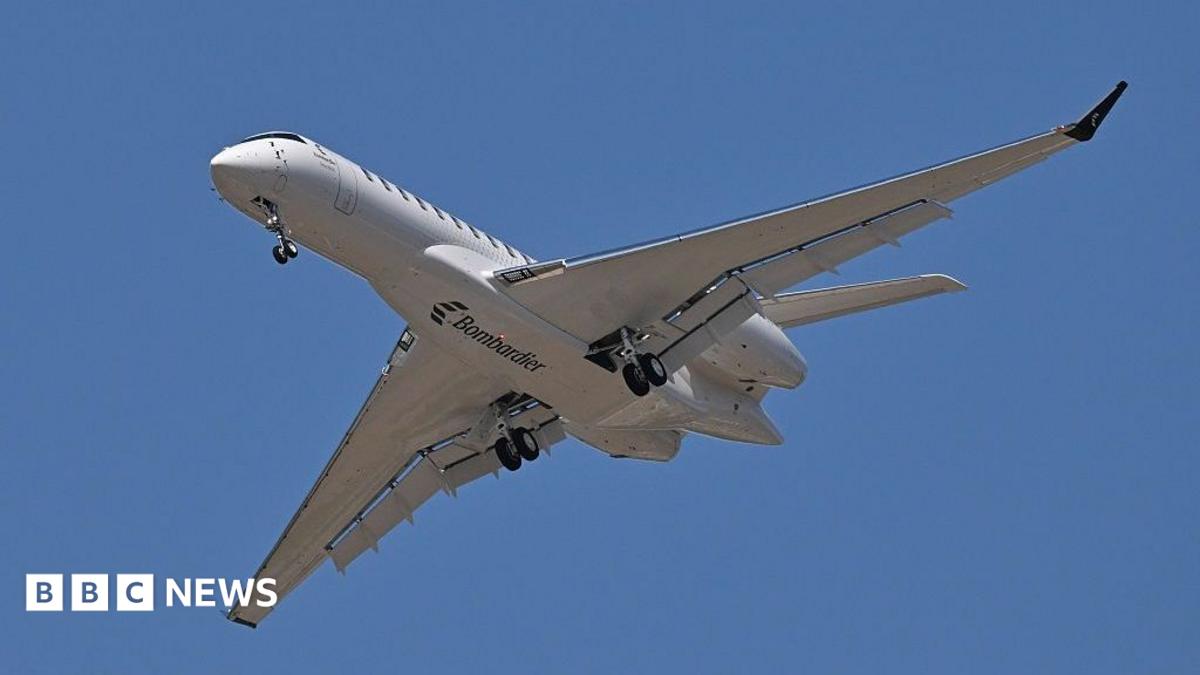
President Donald Trump has warned Canadian aircraft company Bombardier to stop selling its jets in the US unless it relocates manufacturing operations there. Trump’s statement, posted on Truth Social on Monday, reads: "NO MORE SELLING BOMBARDIER IN THE UNITED STATES!". He added, "If they want our Market, they must build here, and stop treating America like a 'piggybank.'"
This move follows an escalation in trade tensions between Canada and the US, with Canada planning to impose retaliatory tariffs worth $20 billion (£14.7 billion) on US goods the following day. The BBC has reached out to Prime Minister Justin Trudeau’s office and Bombardier for comment, but details on how Trump plans to enforce this restriction remain unclear.
Bombardier, headquartered in Montreal, already operates a US factory in Kansas, where it manufactures specialized military aircraft and employs 3,500 American workers. Roughly half of its global fleet—5,100 aircraft—is operated by US-based customers. The company’s production facilities span Canada, the US, and Mexico, and its jets comply with the North American Free Trade Agreement (renamed CUSMA in Canada and USMCA in the US).
Bombardier is a major economic contributor to Canada, having added C$7.4 billion ($5.4 billion; £4 billion) to the country’s GDP in 2024, according to a report commissioned by the company. It is also a key employer in Quebec’s manufacturing sector.
In response to Trump’s threat, Quebec Premier Christine Fréchette described Bombardier as "a source of pride" for her province and a "flagship of our economy." She stated that she has offered full government support to Bombardier CEO Éric Martel and emphasized Quebec’s refusal to allow external pressure to dictate production locations. Fréchette wrote on X: "I will not respond to provocation with provocation. 'Quebec will not allow anyone to dictate where our companies must produce in order to access a market.'"
The trade dispute escalated after Canada withdrew from ongoing negotiations last month, prompting the US to impose new 50% tariffs on Canadian goods. Prime Minister Justin Trudeau accused the Trump administration of presenting "unfair and uneconomic" terms, while US officials claimed Canada’s refusal stemmed from political motivations due to Trump’s unpopularity in Canada. Trudeau denied these accusations.
Trade talks between the two countries collapsed under these tensions, leaving the future of bilateral relations uncertain.
Source: BBC